Gaming news, hands-on reviews, and guides from the island — written by players who bought the thing, not by press releases.
Loading article
Switch 2 Battery Protocol | The Wire | Gamer-Z-Paradise
The Wire · Explainer
Switch 2 Battery Life
How it works
The official estimate, the variables behind it, and the evidence a real test still needs.
Testing not started
0%
The complete answer
What Nintendo's Switch 2 battery estimate does and does not tell you
Nintendo estimates approximately 2 to 6.5 hours, depending on software and conditions. Gamer-Z-Paradise has not completed a battery test, so this draft contains no measured runtime or verdict.
Nintendo's specification establishes the battery capacity, estimated use range, and approximate sleep-mode charge time. It does not show how a particular game, setting, unit, or player session will perform.
What mattersUse the official 2 to 6.5 hour figure as a planning range. Wait for controlled, repeated testing before treating any narrower number as a result.
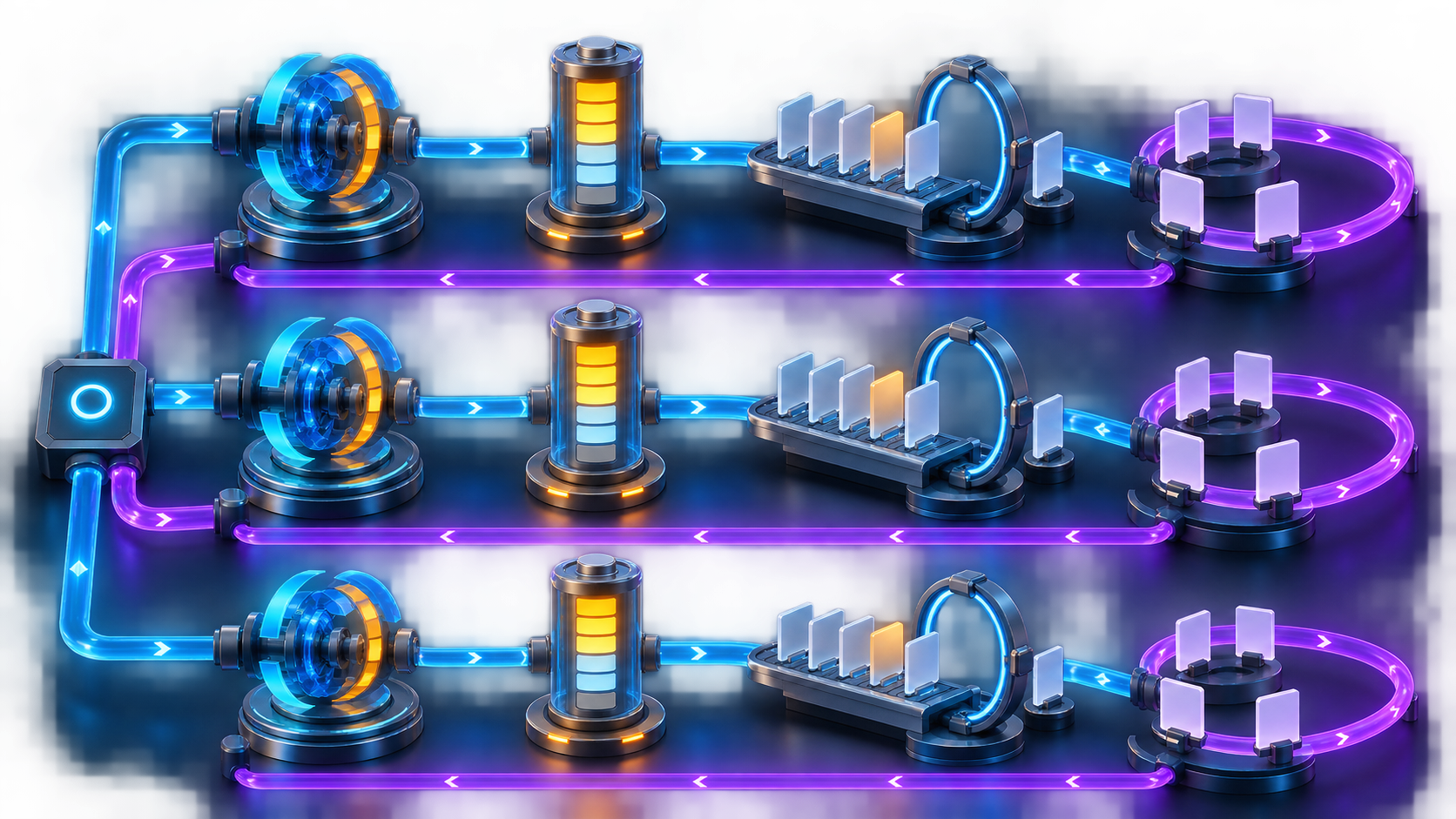
From manufacturer estimate to trustworthy test
Sources and boundariesOne first-party specification is available. No Gamer-Z-Paradise unit, tester, raw log, photograph, measurement, score, or verdict exists.
Use this reading order
Start with the official rangeRecord Nintendo’s current specification as the comparison baseline.
Name the variablesChoose and freeze the variables that can change power draw.
Freeze a scenarioWrite the method, end condition, game build, settings, and system version before the first run.
Repeat complete runsComplete at least three valid runs for every scenario and retain the raw timestamps.
Audit before concludingHave a second reviewer reproduce the summaries and verify the owned evidence.
Decision checklist
Nintendo estimates about 2 to 6.5 hours depending on software and conditions.Game workload, brightness, network activity, audio, vibration, temperature, and battery history can change runtime.A test must identify the exact game build, activity loop, settings, end condition, and system version.
What the evidence supports
These are documented rules, not test results or personal-fit judgments.
3 checksSource-backed
AvailableManufacturer estimateAbout 2 to 6.5 hours, depending on conditions
Not availableGZP measurementsNo controlled runs have been performed
Not supportedBuying verdictNo firsthand evidence exists
RequiredFuture retestTest again after material software or method changes
“A wide manufacturer range is context. A trustworthy result needs named conditions and repeated runs.”— Gamer-Z-Paradise editorial synthesis
Nintendo publishes an estimated battery-life range of about 2 to 6.5 hours for Nintendo Switch 2, depending on the games and conditions in use. Nintendo also lists a 5,220 mAh internal lithium-ion battery and an approximate three-hour charge time while the system is asleep. Those figures describe the manufacturer's specification. Gamer-Z-Paradise has not measured the system and is not presenting a battery-life result.
The wide range is a warning that workload matters. A demanding game, display brightness, wireless activity, audio, vibration, downloads, temperature, battery age, and background behavior can all change runtime. A single number without those conditions would be misleading.
What we cannot conclude yet
We cannot say which games last longest, how much brightness changes runtime, whether charging behavior is consistent, how warm the unit becomes, or whether one person's unit represents retail systems generally. We also cannot issue a score, recommendation, or comparison without firsthand evidence.
What a responsible test would require
A future test needs a documented retail unit and named tester, a frozen game build and repeatable activity loop, fixed display and network settings, a declared end condition, at least three complete runs per scenario, timestamped raw logs, and owned setup photographs. A second reviewer must reproduce every summary from those logs.
How to read future battery tests
A useful battery article should name the exact game and build, whether the system was handheld or docked before the run, display brightness or measured luminance, refresh and graphics settings, audio route and volume, Wi-Fi state, downloads, vibration, accessories, room temperature, firmware, and unit history. It should also state how the tester decided the run had ended.
Look for every complete run, not only an average. A median without the individual results hides variation, while one unusually long or short run can distort a simple mean. The article should explain invalid runs and keep them in the audit packet rather than quietly deleting inconvenient data.
Charging deserves its own method. Charge time while asleep does not establish charge time during active play, with another adapter, or under a heavy workload. A responsible charging claim names the power source, cable, starting state, system state, and end condition.
Practical scenarios a future test should separate
A controlled program should not blend unlike workloads into one headline number. At minimum, it could separate a demanding 3D game, a lighter game, video or menu use, and standby behavior. Each scenario needs a repeatable activity loop and the same declared conditions across runs.
The result should explain who benefits from the difference. A player commuting for ninety minutes may care more about consistency and sleep drain than the longest possible run. A traveler may care about charging options and the margin left after a long session. Those decisions require measured evidence, not assumptions from battery capacity.
Battery health and unit limits
One retail unit cannot prove the behavior of every system. Battery history, manufacturing variation, temperature, and age may affect results. The article should identify the unit source and history without exposing a serial number, state how many units were tested, and avoid turning one sample into a universal promise.
A later retest should be triggered by meaningful system software, game, display, or power-management changes. If the method changes, old and new runs should not be combined without explaining the difference.
Questions the eventual result must answer
The finished article should answer more than “how many hours.” It should show the range between repeated runs, identify the workload that produced each result, explain whether brightness or network changes materially affected runtime, document any interruption or warning, and state how long the system took to return to a useful charge under the declared method.
It should also distinguish observation from explanation. A shorter run can be measured, but the cause cannot be assigned to a game, radio, display setting, temperature, or software change unless the method isolates that variable. Unsupported cause-and-effect language is as misleading as an invented runtime.
The conclusion should translate the measurements into travel or session planning without pretending one test predicts every player's use. If the evidence does not support a recommendation, the article should say so plainly.
What buyers can do now
Treat Nintendo's 2 to 6.5 hour estimate as a planning range, not a promise. If battery life is central to a purchase, wait for controlled independent testing that names the games, settings, system version, unit history, and run-to-run variation.
Source checked August 25, 2026: https://www.nintendo.com/us/gaming-systems/switch-2/tech-specs/